
Packaging is not just about looks—it decides shelf life, product stability, and even your production cost. In recent years, many juice brands have asked me the same question: “Should we use PET cans or aluminum cans for our filling line?”
Both PET and aluminum cans have advantages, but they behave very differently in juice filling. This article compares the two options from a production engineer’s perspective, covering product quality, filling efficiency, logistics, and market positioning.
1. PET cans and aluminum cans: An overview
PET cans
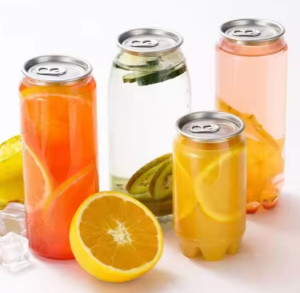
Lightweight, transparent, shatter-resistant
Common sizes: 200ml–500ml
Market edge: attractive appearance, low cost
Limitation: poor light/oxygen barrier
Aluminum cans
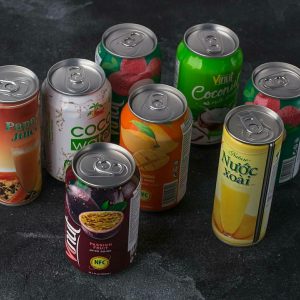
Excellent barrier: no light, no oxygen
Strong, pressure-resistant, recyclable
Common sizes: 250ml–330ml
Market edge: premium look, long shelf life
Limitation: higher cost, heavier
(Insert comparison table: common specifications & barrier performance)
2. What juice filling really demands
Preserving vitamins & freshness → oxygen and light are enemies of Vitamin C
Avoiding oxidation and microbial growth
Compatibility with high-speed filling lines
Packaging that survives cold chain and long transport
3. PET vs Aluminum: Key differences in juice filling
3.1 Impact on juice quality
| Material | Oxygen Permeability | Light Transmission | Ideal para |
|---|---|---|---|
| PET can | 10–20 cm³/m²·24h | Alto | Short shelf-life juices, transparent display |
| Lata de aluminio | 0 | 0 | Long shelf-life, oxidation-sensitive juices |
3.2 Filling process compatibility
PET cans → temperature-sensitive, need careful control
Aluminum cans → can handle higher pressure, ideal for carbonated juice drinks
3.3 Logistics and storage
PET → lightweight, cheaper to ship, but prone to deformation
Aluminum → strong, stackable, safe for long-distance transport
3.4 Sustainability & recycling
PET → recyclable but perception varies by market (some regions prefer glass/aluminum for premium drinks)
Aluminum → widely accepted as “eco-friendly,” strong appeal in export markets
3.5 Cost comparison
PET → lower material cost, but may limit shelf life
Aluminum → higher upfront cost, but better for export and premium positioning
4. Application scenarios & recommendations
| Tipo de zumo | Shelf Life | Recommended Can | Reason |
|---|---|---|---|
| Fresh orange juice | 7 days | PET can | Transparent, low cost, fast turnover |
| 100% mixed juice | 30 days | Lata de aluminio | Strong barrier, better for transport |
| Carbonated juice drink | 60 days | Lata de aluminio | Pressure-resistant, avoids leakage |
5. Conclusion & selection guide
PET cans: lightweight, transparent, best for short shelf-life juice and local markets.
Aluminum cans: premium look, best for long shelf-life juice and export markets.
The choice depends on your product type, shelf life, and target market.
Summary & selection guide
If you are planning a juice filling project and unsure whether PET or aluminum cans fit your product, share your recipe and target market with us.
We’ll recommend the best packaging and filling solution, and design the right can filling machine for your line.


 English
  Russian
  Spanish